

Print Our articulated MPhil-PhD programme provides students with an opportunity of being involved in in-depth studies and focused research in selected areas of electronic engineering. The programme is intended to foster high-quality and forward-looking research activities, so as to meet the society's demand for high-caliber engineers who are knowledgeable in the latest technologies. The Department of Electronic Engineering has four research groups which are Robotics, Perception and Artificial Intelligence, Multimedia and Signal Processing, Integrated Circuits and Systems, Solid State Electronics and Photonics covering the following research areas:
Robotics, Perception and Artificial Intelligence Group
Robotics with Medical, Service, and Industrial Applications
Perception, Sensors and Computer Vision
AI, Pattern Recognition, and Human Machine Interaction
Intelligent and Integrated Systems
Multimedia and Signal Processing Group
Digital Signal Processing and Speech Technology
Image and Video Processing
Integrated Circuits and Systems Group
Microwave and Wireless Communications
VLSI and ASIC
Energy Conversion
Solid State Electronics and Photonics Group
Photonics and Optical Communications
Solid-State Electronics and Smart Sensing
Applicants are advised to contact professors aligned with their research interests before submitting the application. The email addresses of our professors could be obtained from our department website.
Application Requirements
Applicants are eligible to apply for PhD studies even without holding a research-based master's degree. The normative period of study for articulated MPhil-PhD study is 4 years. Subject to satisfactory academic performance and research progress, postgraduate studentships will be provided to students throughout their normative period. However, holders of a research master's degree from a Hong Kong UGC funded institution may only be eligible for 3 years' funding and their normative period is thus reduced to 3 years. An applicant can also apply for MPhil study. The normative period is 2 years.
Applicants for the MPhil Stream should:
- have graduated from a recognized university and obtained a Bachelor degree in Applied Mathematics / Computer / Electrical / Electronic Engineering / Materials Science and Engineering / Physical Sciences or related fields, normally with honours not lower than Second Class; OR
- have graduated from an honours programme of a recognized university with a Bachelor degree in Applied Mathematics / Computer / Electrical / Electronic Engineering / Materials Science and Engineering / Physical Sciences or related fields, normally achieving an average grade of not lower than 'B' in undergraduate courses.
Applicants for the PhD Stream should:
- have a research Master's degree from a recognized university in Applied Mathematics / Computer / Electrical / Electronic Engineering / Materials Science and Engineering / Physical Sciences, or related fields; OR
- have a Bachelor degree, normally with Second Class Honours in the upper division or above; OR
- have been registered as a Ph.D. student at a recognized university for at least one year, and have been approved for application by the affiliated Graduate School.
Notes on English Language Proficiency:
All students should fulfil the English Language Proficiency Requirement prescribed by Graduate School before they are admitted.
Please refer to the Graduate School website for the information of English Language Requirements for Admission:
https://www.gs.cuhk.edu.hk/admissions/admissions/requirements#english-language-requirements-for-admission
Overview of Scholarship Schemes
CUHK offers a wide range of scholarships and financial support to attract outstanding students to begin their postgraduate studies at CUHK.
Please visit CUHK Scholarship Schemes – CUHK Graduate School | Postgraduate Admissions for more details.
Hong Kong PhD Fellowship Scheme (HKPFS)
Candidates who consider themselves outstanding and are interested in CUHK electronic engineering research are encouraged to apply for the EE PhD programme and the Hong Kong PhD Fellowship Scheme (HKPFS) jointly. Please visit https://www.gs.cuhk.edu.hk/admissions/scholarships-fees/hkpfs for more details.
HKPFS Application Deadline (for PhD programmes only)
- To submit an initial application to RGC: By 12 noon, 1 December 2026 (Hong Kong time); and
- To submit full application to CUHK: By 5pm, 1 December 2026 (Hong Kong time).
Please refer to HKPFS page for more details.
Application Procedures
Early applications will be under our first-tier consideration. For truly outstanding candidates, exceptional early or late offers would be possible. Applicants should ensure all application materials arrive at the department office before the respective application deadlines to ensure sufficient time for validation and processing of their documents.
The admission schedule may be different from year to year. Mostly, the interview will be arranged from December. Only selected candidates will be invited to attend the interview.
To be considered for interview in early December, please submit the application materials as early as possible and preferably by 2 November 2026. Shortlisted applicants will be informed by email in due course.
Candidates who consider themselves outstanding and are interested in CUHK electronic engineering research are encouraged to apply for the CUHK EE PhD programme and the HKPFS jointly. The application deadline of the HKPFS is 1 December 2026 at Hong Kong Time 12:00:00 (GMT +8 hours). For details, please visit https://www.gs.cuhk.edu.hk/admissions/scholarships-fees/hkpfs.
To be considered for HKPFS or main round admission, all required documents should be submitted to the online system by 1 December 2026.
Applications in Clearing Round will only be considered on a case-by-case basis, subject to availability of new positions offered by the potential supervisor.
Online application is available at https://www.gs.cuhk.edu.hk/admissions/admissions/how-to-apply.
Please read the information on the Graduate School's website carefully (https://www.gs.cuhk.edu.hk/admissions/). In addition to the application materials generally required by the Graduate School (https://www.gs.cuhk.edu.hk/admissions/admissions/documents-required), applicants must also submit the following application materials to the Graduate School's Online Application System:
Applicants normally will receive an email from our Division in around five working days after submitting the online application. Applicants will be required to upload all mandatory and required application materials to our Division’s online system for review by the selection panel.
List of Mandatory Materials for All Applicants:
- Complete online application
- Application fee
- One photocopy of your HKID card or other identity document as given in the Application Form
- Original and complete official transcripts covering all semesters/terms for all tertiary level studies. Any missing study periods should be supported with valid documents.
- Original certification letter of Cumulative GPA (cGPA) or Weighted Average Score (加權平均分) issued by the University (if not attached to the official transcript)
- Original official letter or explanation notes of the official grading schemes (成績等級與績點換算關係表) (if not attached to the official transcript)
- Original official ranking certificate issued by the University (if available)
- Copies of Degree Certificate (for degree holder only)
- Copies of certificates of academic/professional qualifications (if available), may include university certificates of graduation, examination certificates and proof of other qualifications.
- All documents, including transcript and certifying letters, must be issued by the appropriate offices, i.e. the Registry (教務處), Undergraduate Office (本科生院), Graduate School (研究生院) or Archives Office (檔案館) with their official stamps.
- Assessment report from the HKCAAVQ (if necessary)
- An official score report of TOEFL (share result with “0812 - The Chinese University of Hong Kong”), or IELTS (Academic) (share result with “The Chinese University of Hong Kong - Graduate School”) or GMAT (Verbal), shared via the official portal. TOEFL and IELTS scores are considered valid for two years from the test date. GMAT scores are considered valid for five years from the test date.
- Detailed list of awards and scholarships with supporting documents (e.g. award certificates, official website or email announcement, etc.)
- Invite THREE referees to complete the Confidential Recommendations Report (submit through the Graduate School's Online Application System)
Mandatory Materials for Applicants from Mainland Chinese Universities:
- Copies of Mainland ID card and Hong Kong and Macao Travel Permit (if applicable).
- Applicants studying at Mainland Chinese universities are required to provide the Online Verification Report of China Higher Education Student’s Academic Transcript (中國高等學校學生成績驗證報告) with grading scheme issued and shared directly by CHSI (學信網): https://www.chsi.com.cn/xlrz/rhsq_index.jsp.
- Applicants studying at Mainland Chinese universities are required to provide a valid Chinese version of Online Verification Report of Student Record (教育部學藉在線報告) issued by the CHSI (學信網): https://www.chsi.com.cn/xlcx/bgys.jsp.
- Applicants who obtained degrees from Mainland China universities are required to provide a valid Chinese version of Online Verification Report of Higher Education Qualification Certificate (教育部學歷證書電子註冊備案表) and a valid Online Verification Report of Higher Education Degree Certificate (中國高等教育學位在線驗證報告) issued by the CHSI (學信網): https://www.chsi.com.cn/xlcx/bgys.jsp.
- Applicants who obtained degrees from Mainland China universities are required to provide copies of official Chinese version of Degree Certificate (學士學位証書) and Academic Credential (畢業証書) with photos.
- Applicants from Mainland Joint programmes of Chinese-Foreign Cooperation in Running Schools (CFCRS) (中外合作办学) are required to provide detailed information about the programme and a valid proofing document (中外合作辦學境外學歷學位證書認證) generated from the CFCRS platform (中华人民共和国教育部中外合作办学监管工作信息平台): https://www.crs.jsj.edu.cn/.
Other Required Application Materials:
- Brief Curriculum Vitae
- An information sheet to be filled in. It is a standard format specified by our department which essentially summarizes the personal information and academic qualification. It can be downloaded from here.
- Research / purpose statement (about 600 - 800 words in English, compulsory for PhD application)
- Personal statement
- Copies or abstracts of published papers or research project reports (if available)
- Recommendation letter by the past / current affiliated institution(s) (if available)
Remarks
CUHK qualifications (Bachelor’s or higher degrees):
- Photocopies of official transcripts (Student Copy) issued by CUHK are accepted (not applicable to CUHK (Shenzhen) qualifications). However, the University reserves the right to require applicants to submit original transcripts.
Other qualifications:
- Starting from the 2020-21 intake, scanned copies of the latest official academic transcripts with official chop from the Registry or Office responsible for handling student records is accepted for issuing the admission offers. However, documents printed from the system or any other documents without a proper letterhead and an official chop will not be accepted. Besides, there should be explanatory notes printed / attached to the transcript indicating the grading scheme of the University.
- Original Official transcripts and certifying letters should be sent directly to relevant Graduate Division from the issuing university. All documents, including transcript and certifying letters, must be issued by the appropriate offices, i.e. the Registry (教務處), Undergraduate Office (本科生院), Graduate School (研究生院) or Archives Office (檔案館) with their official stamps.
- Certificates and transcripts, which are not in English or Chinese, should be accompanied by an official certified translation in English.
- Some universities may only issue electronic official transcripts to other institutions. In that event, official electronic transcripts should be sent to relevant Graduate Division (eepgadm@ee.cuhk.edu.hk) directly from the issuing university.
- Applicants with degrees awarded by overseas universities by distance learning or by completing a curriculum of short duration may be required to provide assessment report from the Hong Kong Council for Accreditation of Academic & Vocational Qualifications (HKCAAVQ) on the level of qualification obtained. Applicants will be notified by the Graduate Division concerned separately.
- The certified true copy must be issued by the official organization or relevant test organization. The University may require applicants to provide the original documents for verification.
- The University may require applicants to provide verification reports of the qualification obtained (e.g., verification report issued by the China Academic Degrees and Graduate Education Development Center). Applicants will be notified by the Graduate Division concerned/Graduate School separately.
- Admitted students are required to submit original copies of those official documents for verification by the conditions fulfillment deadline. Otherwise, they will not be allowed to register and commence studies at the University. Official transcripts should be sent directly to relevant unit stated in Admission Notification in a sealed envelope from the issuing university.
Proof of English Language Proficiency:
- A copy of graduation certificate issued by a university in Hong Kong; or
- A certifying letter issued by the Registry of the university confirming the medium of instruction of your degree programme was English; or
- TOEFL and IELTS are considered valid for two years from the test date. GMAT is considered valid for five years from the test date. (The official score report should be sent directly from the test organization to the University)
- Applicants for the Hong Kong PhD Fellowship Scheme (HKPFS) are required to submit score reports of TOEFL / IELTS (Academic). GMAT result is not accepted.
Applicants are required to upload all mandatory supporting documents to the Graduate School and Division by the application deadline. Otherwise, the applications may not be further processed.
The University may require applicants to submit additional information or documentary proof if deemed necessary. All documents submitted will not be returned and will be destroyed if the application is unsuccessful.
Postal address for submitting original official documents for applications:
Division of Electronic Engineering (MPhil-PhD)
Room 404, Ho Sin Hang Engineering Building,
The Chinese University of Hong Kong,
Shatin, NT, Hong Kong SAR,
P.R. China
Please always quote the Application No. in the correspondence.
For more information, please refer to the FAQ, or email to eepgadm@ee.cuhk.edu.hk.
Application Result
We will try to let you know the result as soon as possible. Normally it will be within 3 to 4 weeks after the interview. However, in some cases, the decision may be made at a fairly late stage, for example, in April or May. Please note that an official admission offer must be issued only by the department or the graduate school.
- For applicants who apply for PhD programmes through HKPFS, Research Grants Council will announce results by late March.
- For applicants who apply for MPhil/PhD or taught postgraduate programmes directly with the University (i.e. non-HKPFS applicants), you may login the Application for Admission to Postgraduate Programmes and check your application results in the section of "View Application Result" (https://www.gradsch.cuhk.edu.hk/OnlineApp/login_email.aspx).
- Applicants who do not receive notification by early September can assume their applications have been unsuccessful. No written notification will be sent to unsuccessful applicants.
Enquiries
-
AddressDivision of Electronic Engineering (MPhil-PhD in Electronic Engineering)
Room 404, Ho Sin Hang Engineering Building,
The Chinese University of Hong Kong, Shatin, NT, Hong Kong -
Tel(852) 3943 8270
-
Fax(852) 2603 5558
-
Website
-
Email
-
Office HoursMonday to Thursday: 8:45 a.m. - 5:30 p.m.
Friday: 8:45 a.m. - 5:45 p.m.
(Newly-admitted students should refer to the Study Scheme on CUSIS)
An applicant can apply for PhD study even if he/she does not hold a research master's degree. The normative period of study for articulated MPhil-PhD study is 4 years. Subject to satisfactory academic performance and research progress, postgraduate studentships will be provided to students throughout their normative period. However, holders of a research master's degree from a Hong Kong UGC funded institution may only be eligible for 3 years' funding and their normative period is thus reduced to 3 years. An applicant can also apply for MPhil study. The normative period is 2 years.
The main features of MPhil-PhD programme can be found HERE. In summary, MPhil and PhD are regarded as two separate streams in the MPhil-PhD programme. A student will be admitted as either an MPhil student or a PhD student.
Read the report 考研路我們同行:如何到香港中文大學免費讀研 on WNEWS.COM
MPhil Stream
The MPhil study is research oriented. The normative duration is 2 years for full-time students and 3 years for part-time students with a bachelor degree. An MPhil student is required to complete minimum of 12 units (4 graduate-level courses). At least one faculty core course must be taken. Students have to obtain at least a B for the Faculty core course to satisfy the core course requirement.
In addition, the student is required to carry out a research project of about 18 months in duration from which a satisfactory thesis is to be submitted. The student must also attend the oral examination to present his/her work to an appointed thesis committee. Students with good academic performance in their first year of study may be permitted to transfer to the PhD stream.
PhD Stream
The PhD stream provides in-depth training for students who are interested in theoretical or applied research. The normative period for full-time study is 4 years. However, holders of a research master's degree from a Hong Kong UGC funded institution may only be eligible for 3 years' funding and their normative period is thus reduced to 3 years. For part-time study, the normative period is 4 years for a student with a research master's degree.
The major requirement for a PhD student is a doctoral thesis that contains a substantial amount of original research work in the selected areas. The thesis needs to be read, assessed and endorsed by an appointed thesis committee. The student must attend the oral examination in which he has to present his/her research to the thesis committee and answer any questions from the committee. It is generally expected that the research is of publishable quality in reputable journals.
A PhD student is also required to complete a minimum of 18 units (6 graduate-level courses). At least one faculty core course must be taken. Students have to obtain at least a B for the Faculty core course to satisfy the core course requirement.
Screening test
Starting from 2013, there is a screening test for both the MPhil and PhD year one students 9 months after admission. The purpose of the test is to find out if the student has the aptitude to carry out research at a postgraduate level in their chosen specialization. Failure of the test may result in the termination of the postgraduate studentship.
Progression of candidacy
All students in the PhD stream will be admitted initially in the pre-candidacy status. Upon satisfying the division's candidacy requirements, a student will be allowed to progress to the post-candidacy status. These requirements include:
- at least 15 units of graduate courses
- the Candidacy examination
- the thesis proposal defense
- IPL modules on "General Safety" (both Part A and B) and pass the corresponding safety examination
- IPL module on "Introduction to Research & Thesis Writing For Engineering, Medicine & Science" or "Thesis Writing Workshop for Engineering, Medicine & Science"
The candidacy examination is a written examination to ensure that the student has a fundamental set of knowledge in Electronic Engineering. The examination is held twice a year.
As a mid-term assessment, the student must pass a Thesis Proposal Defense assessed by an appointed panel. The main purpose of the Thesis Proposal Defense is to assess the suitability of the candidate for research work at the doctoral level and to identify the weak points (if any) in the field of specialization.
Doctoral thesis
The major graduation requirement for a PhD student (post-candidacy) is a doctoral thesis that contains a substantial amount of original research work in the selected areas. The thesis will be read, assessed and endorsed by an appointed thesis committee. The student must attend the oral examination in which he has to present his/her research to the thesis committee and answer any questions from the committee. It is generally expected that the research is of publishable quality in reputable journals.
-
Notes
- Part-time PhD students are admitted only as exceptional cases.
- Admission of part-time MPhil students is based on both their academic records and the condition that they can devote an adequate amount of time for the completion of the study.
For more information, please refer to the FAQ, or email to gradinfo@ee.cuhk.edu.hk.
The Department's research covers the following areas:
- Robotics, Perception and Artificial Intelligence (Robotics, Perception and Artificial Intelligence Group)
- Robotics with medical, service, and industrial applications
- Perception, sensors and computer vision
- AI, pattern recognition, and human machine interaction
- Intelligent and integrated systems
- Digital Signal Processing and Speech Technology (Multimedia and Signal Processing Group)
- Speech and Speaker Recognition
- Speech Processing for Hearing Aids and Cochlear Implants
- Music Signal and Information Processing
- Knowledge-based Separation of Audio Sources
- Signal Processing for Communications
- Convex Optimization Techniques for Signal Processing
- MIMO and Cooperative Communications
- Sensor Networks and Sensor Array Processing
- Image and Video Processing (Multimedia and Signal Processing Group)
- Image/Video Processing and Coding
- Image/Video Segmentation and Rendering
- Subjective Image/Video Quality Evaluation
- Image Formation and Reconstruction
- Computational Imaging
- Microwave and Wireless Communications (Integrated Circuits and Systems Group)
- MMIC and RFIC Design
- Novel Design of High Efficiency High Linearity Power Amplifiers
- Electromagnetic Analysis Classification
- Multi-Chip-Module Technologies
- RFID Technologies
- Advanced Antenna Design Techniques
- VLSI and ASIC (Integrated Circuits and Systems Group)
- Mixed Signal IC Designs
- System-on-Chip and Network-on-Chip
- Ultra-Low Supply Circuit Techniques
- Low-Power Designs
- Power-Management IC Designs
- Data Converters
- Energy Conversion
- Power Converter Design
- Modulation and Control
- Grid Interfering and Power Quality
- Thermal Management
- Clean Energy Harvesting and Conversion
- Photonics and Optical Communications (Solid State Electronics and Photonics Group)
- Optical Communications and interconnects
- Silicon Photonics and Quantum Technologies
- Acousto-Optic and Optomechanical Nanodevices
- Photonic Micro- and Nano-Electromechanical Systems
- Optical Fiber Sensing Technologies
- Advanced Modulation Formats in Fiber Communications
- Ultrafast Optical Signal Processing
- Solid-State Electronics and Smart Sensing (Solid State Electronics and Photonics Group)
- Advanced Materials and Devices for Electronics, Photonics and Sensors
- Nanoelectronics and Nanophotonics
- Organic Electronics/Photonics
- Wearable Electronics
- Advanced Electronic Packaging Technologies
- 2D Electronic Materials
- Quantum Dots and Photovoltaics
- Printable Electronics and Sensors
The following list shows the graduate-level lecture courses in Electronic Engineering. About six of them are offered each year. The latest teaching time table can be found in the Graduate School web page (http://www.gs.cuhk.edu.hk/page/TeachingTimetable).
Graduate-Level Lecture Courses
Faculty Core Course List
*The course list will be reviewed each year
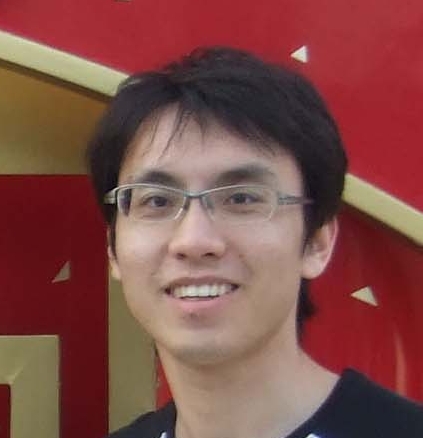

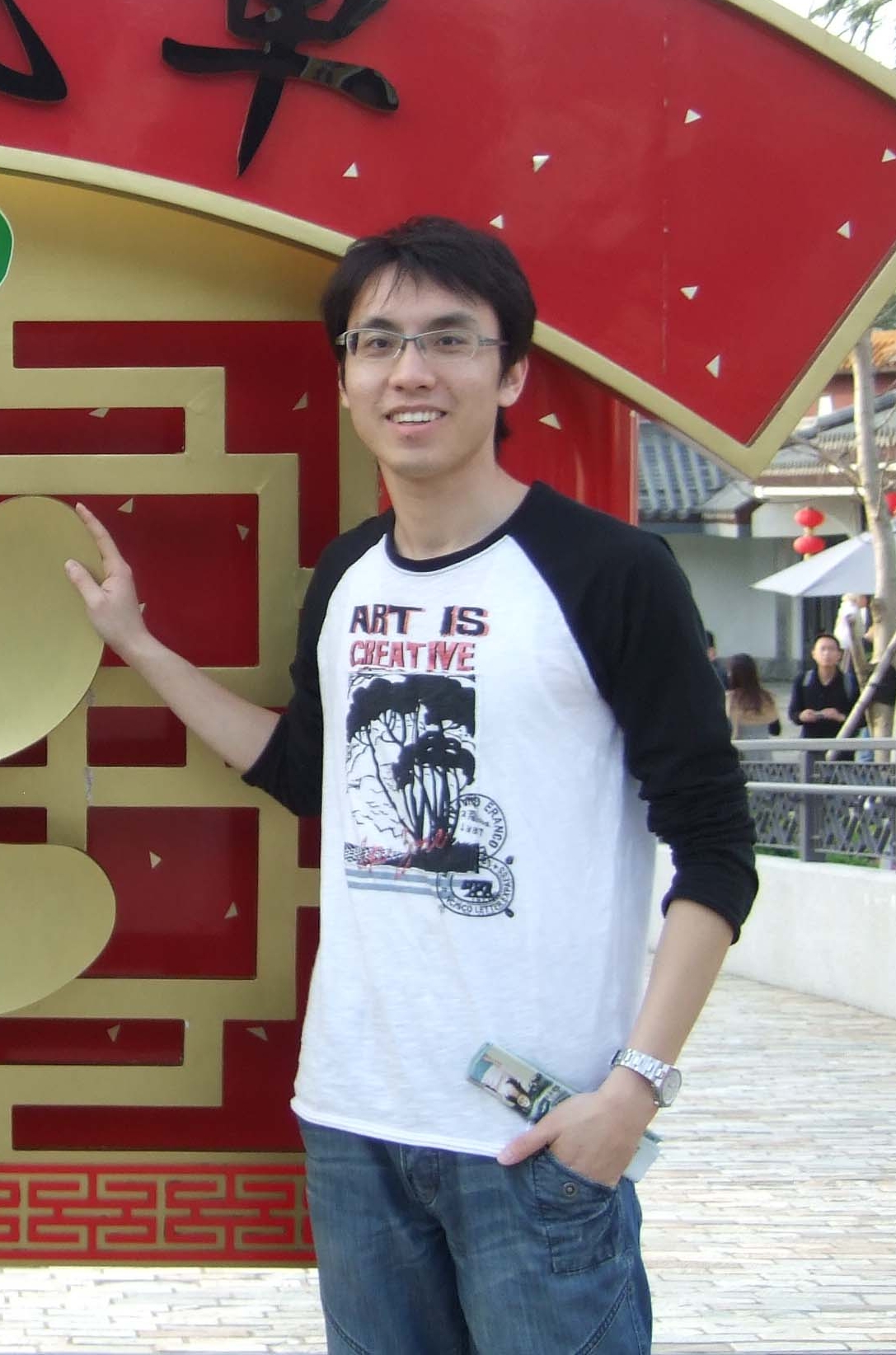
CHENG, Zhenzhou 程振洲
B.S. Physics (Nankai University) 2006, M.S. Optics (Nankai University) 2009,
admitted to Ph.D. (EE) through HK PhD Fellowship Scheme in 2010, Ph.D. (EE) 2013
Postdoctoral Fellow at CUHK-EE
It is my honor to receive the Hong Kong Ph.D. Fellowship and join EE Department of CUHK to pursue the Ph.D. degree. With the free and open academic atmosphere in the laboratory, I am encouraged to discover my favorite research topic. The supervisor teaches me how to complete a high impact research work with his creativity and strive for excellence. In more than two years, the Ph.D. programme of EE Department as well as the international conferences and academic exchange have brought me an obvious improvement in terms of professional knowledge, research capacities, and presentation skills. The training and experiences in EE Department let me have a clear planning for future career, and help me to be fully prepared.
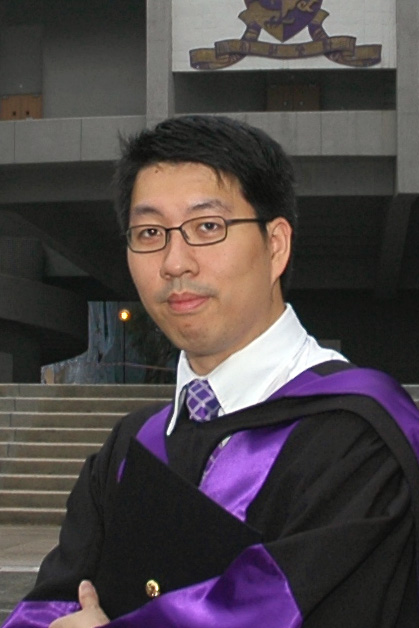
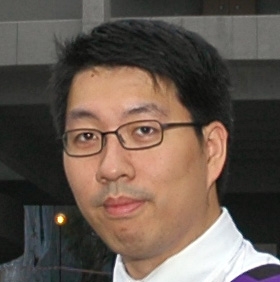
MAK, Lawrence Chun Man 麥振文
B.A.Sc (University of Toronto) 1999, M.Phil. (EE) 2004, Ph.D (EE) 2008
Senior Researcher, Hong Kong Applied Science and Technology Research Institute Co. Ltd.
The EE Department of CUHK offers an excellent environment for graduate students to learn state-of-the-art technology and get involved in the related research work. During my M.Phil. and Ph.D. studies, I could have a good chance to understand more about the professional side of the field through handling the top-notch facilities and equipments in the laboratories, not to mention being inspired by numerous knowledgeable students and scholars from different places. The sharing of ideas and findings smoothed my research work to a great extent. Various graduate courses offered by the Department widened my horizon in terms of research methods and the use of technology. My studies at CUHK do help me to be well-equipped before facing the ongoing challenges in the electronics research field.

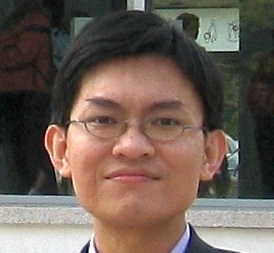
FAN, Vivian Wen 范文
B.Eng and M.Phil. (Huazhong University of Science and Technology), Ph.D. (EE) 2011,
Postdoctoral in ECE, San Diego State University
The atmosphere of ASIC/VLSI Lab in EE Department is free and easy. As a Ph.D. student, I could choose the research topic I am interested in. Instead of being told what to do step by step, I learned to plan and organize my research progress in four years. Everyone around me worked very hard, which was the reason that we have good publications every year. I was encouraged to attend international conferences by my supervisor, so that I could communicate with other experts in my research area and sometimes inspired by others’ works. Ph